Updated: October 2026
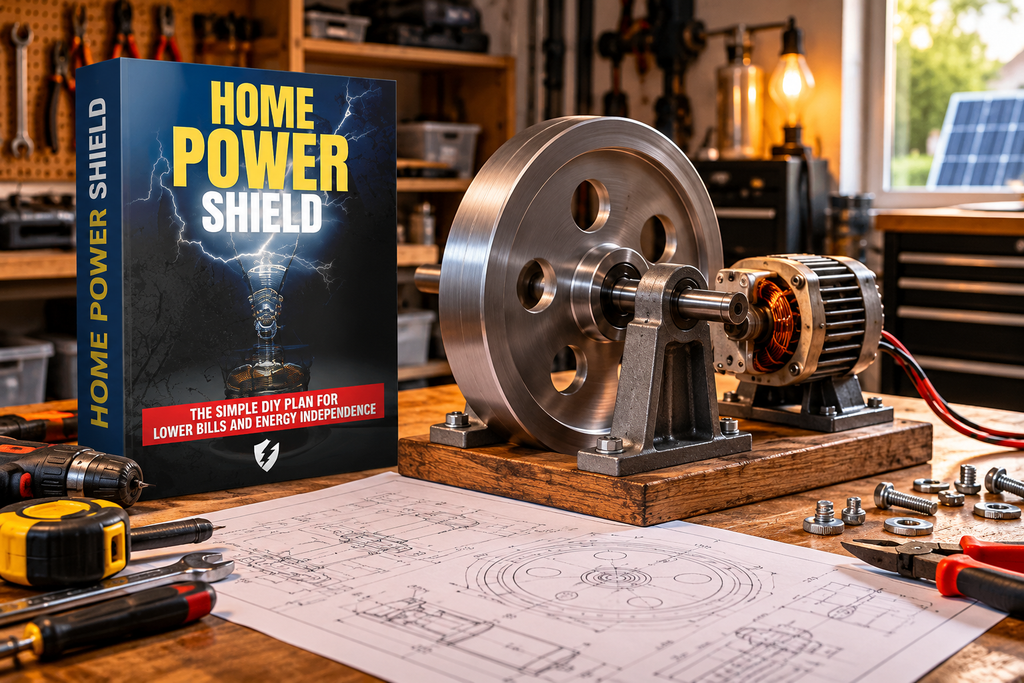
Home Power Shield is a digital DIY guide that claims you can build a small flywheel-based generator at home and slash your electricity bill by up to 80%. It is sold through ClickBank for around $39, with an additional estimated $200 in hardware store materials to build the device.
The short verdict: Home Power Shield is worth looking into if you enjoy DIY energy projects, want to learn about flywheel technology, and are going in with realistic expectations. It is NOT for anyone expecting to power their home or see the dramatic savings shown in the ads. The company’s own legal disclaimer describes it as “an experiment that was not technically assessed.” That tells you everything you need to know about the claims.
That said, the ClickBank 60-day refund policy provides a safety net, so the financial risk is limited.
What Is Home Power Shield?
Home Power Shield is a downloadable PDF guide, not a physical device. When you buy it, you receive blueprints and step-by-step instructions to build a small flywheel-based generator using parts from a hardware store.
You are buying the plan, not the finished product. The device is something you build yourself.
The guide is sold by a company called OLDSMART ADS FACTORY SRL, based in Romania. The public face of the product is “Charles Mason,” but the company’s own website discloses that this is a pen name used by their writers for privacy. The fictional backstory about a firefighter from Sacramento is described by the site itself as “created strictly for promotional purposes.”
It is available via ClickBank, which is a legitimate digital marketplace used by thousands of sellers. ClickBank being involved does not make a product good or bad, but it does mean the 60-day refund guarantee is real and enforceable.
👉 Try Home Power Shield risk-free for 60 days
Quick Summary Table
| Field | Detail |
|---|---|
| Product Name | Home Power Shield |
| Creator / Vendor | OLDSMART ADS FACTORY SRL (“Charles Mason” pen name) |
| Format | Digital PDF guide + blueprints |
| Price | ~$39 (guide) + ~$200 estimated materials |
| Refund Policy | 60-day money-back guarantee via ClickBank |
| Category | DIY energy / alternative energy guide |
| Contact | charles@homepowershield.com |
| Platform | ClickBank |
| Recommended For | Curious DIY enthusiasts with realistic expectations |
| Not Recommended For | Anyone needing reliable backup power or expecting big savings |
Who Is It For (and Who Should Skip It)?
Home Power Shield may be a fit if you are:
- A hands-on person who enjoys building things from blueprints
- Curious about alternative energy and want to experiment at low cost
- Preparing for short-term outages and want a DIY learning project
- Comfortable treating this as an educational experiment, not a guaranteed solution
Skip it if you are:
- Expecting to cut your electricity bill by 80% as advertised
- Looking for a reliable backup power source for critical needs (medical equipment, full home coverage)
- Not comfortable with DIY electrical projects or basic tool use
- Needing independently verified, certified energy output data before spending
How It Works
The concept behind Home Power Shield is flywheel energy storage, which is real, established science. A flywheel stores kinetic energy in a spinning mass and can release it back as electricity.
Industrial flywheel systems are used in grid stabilization, data centers, and transportation. That part is legit.
The issue is scale. Commercial flywheel systems that produce meaningful power outputs use precision-machined rotors, vacuum-sealed chambers, and advanced bearings. They are industrial machines, not something you build from parts at Home Depot.
The Home Power Shield guide claims you can replicate the principle using simple hardware store parts in 2-3 hours. What the sales page does not tell you is that the energy output from such a small DIY setup is very limited. No wattage ratings, no kilowatt-hour output, no efficiency specs are published anywhere on the site.
The company’s own disclaimer on their website states: “The product is an experiment, it was not technically assessed.” That is their own language, not ours.
What You Actually Get
After purchase, you receive digital access to:
- A blueprint guide with illustrated instructions
- A materials list for hardware store sourcing
- Bonus guides (titles vary, often something like “Miracle Fuel Cookbook” or “Battery Secrets Handbook”)
- Claimed lifetime email support via charles@homepowershield.com
You do NOT receive a physical device. Nothing ships to your door. The build is entirely on you.
Total stated cost according to the company: approximately $239 ($39 for the guide plus around $200 in materials).
👉 Get the Home Power Shield guide + 60-day money-back guarantee
What People Liked
Based on user feedback across various platforms, here is what buyers found positive:
- Low entry cost — At $39, the guide itself is affordable to test without huge financial risk
- Engaging learning experience — People interested in energy physics found the flywheel concept educational
- Easy to get a refund — Most buyers reported the ClickBank refund process worked smoothly
- Beginner-friendly instructions — The blueprint guide is described as straightforward and not overly technical
- Good for off-grid curiosity — Homesteaders and preppers who enjoy DIY projects found it a low-risk experiment
- Instant digital access — No waiting. You get the guide immediately after purchase
Honest Weaknesses
This is the section most affiliate reviews skip. We are not going to do that.
- The energy output claims are not verifiable. No wattage specs, no kilowatt-hour data, no independent testing results exist for this specific device. The company admits it is “an experiment.”
- The sales narrative is fictional. The company’s own disclaimer calls the backstory “promotional” — meaning the firefighter story and the dramatic savings examples are marketing, not real accounts.
- Aggressive upsell sequence after checkout. Multiple add-ons are pushed immediately after purchase. The core guide is what you paid for; you do not need the add-ons.
- The flywheel principle works at industrial scale, not DIY scale. A device built from hardware store parts will produce very limited energy output, not anything close to powering household appliances in a meaningful way.
- No safety certifications. No UL listing, no third-party electrical safety testing is published. DIY electrical projects carry real risks if done incorrectly.
- The company operates under a pen name and is based in Romania. This does not make them a scam outright, but it does mean your dispute would technically fall under Romanian law, with ClickBank being your most practical recourse.
- Similar products have been called out before. MalwareTips and other cybersecurity watchdogs have flagged the “free energy blueprint” product category as a recurring pattern of misleading marketing.
The Red Flags You Need to Know
We want to be direct here. Home Power Shield uses several marketing tactics that you should recognize as warning signs in any product:
1. Suppression narrative — The idea that “power companies are hiding this” is a classic tactic in alternative energy marketing. Flywheel energy storage is openly researched and commercially developed by major companies. There is no suppression.
2. NASA name-dropping — The sales page references NASA and major publications in relation to flywheel technology. Flywheel energy is a real field that NASA has researched. But those references are about the technology category, not this product. NASA has not endorsed this guide.
3. Fake inventor story — “Charles Mason” is a pen name. The emotional story is described as fictional on the company’s own website.
4. Testimonial numbers without verification — Claims of 57,000+ families using the system appear in some versions of the marketing. No third-party audit or verified data source supports these numbers.
5. Rebranding history — Products like this often relaunch under new names (Home Energy Freedom, Overunity Breakthrough, Edison Energy Box) when they gain too much negative attention. This is a documented pattern in the “DIY free energy” product category.
None of this means you can’t get a refund or that the PDF itself is dangerous. It means you should go in with eyes open and treat the 60-day refund window as your protection.
The Truth About Flywheel Technology (A Unique Breakdown)
This is something no other review is covering properly, so let us fill the gap.
Flywheel energy storage is 100% real. Companies like Beacon Power, Amber Kinetics, and Vycon have built commercial flywheel systems that stabilize power grids and provide UPS backup. The physics is legitimate.
Here is the problem with scaling it down:
- Energy stored = ½ × I × ω² (moment of inertia × angular velocity squared). A small flywheel spinning at low speed stores almost no useful energy.
- Commercial systems use carbon fiber rotors spinning at 20,000–50,000 RPM in a near-vacuum. Hardware store components cannot replicate this.
- Air friction (called “windage loss”) alone drains a slow, exposed flywheel fast — which is why commercial systems are vacuum-sealed.
- Converting the mechanical spin back to usable AC power requires a proper alternator, inverter, and wiring — all of which add cost and complexity not fully addressed in DIY guides like this.
Bottom line: A flywheel built from common materials can demonstrate the physics concept. It is not going to power your refrigerator or replace grid electricity in any meaningful way with current DIY materials and methods. The gap between “flywheel technology is real” and “this $39 guide will slash your electricity bill 80%” is enormous.
Home Power Shield vs Real Alternatives
| Option | Cost | Verified Output? | Warranty? | Best For |
|---|---|---|---|---|
| Home Power Shield | ~$239 total | No | 60-day refund only | DIY experiment / curiosity |
| Portable Power Station (Jackery/EcoFlow) | $300–$3,000 | Yes (rated wattage) | 1–5 years | Short-term backup power |
| DIY Solar Kit | $500–$3,000 | Yes (panel specs) | Varies | Renewable energy learners |
| Whole-Home Standby Generator | $3,000–$15,000+ | Yes | 2–5 years | Full home backup coverage |
| Solar Panel Installation (pro) | $10,000–$25,000+ | Yes | 10–25 years | Long-term bill reduction |
The price gap is obvious. Home Power Shield is dramatically cheaper. But the alternatives come with rated, tested, warranted performance that this product does not offer. You are paying more for certainty.
If your goal is real, reliable backup power, invest in a certified portable power station or a professional solar setup. If your goal is a low-cost DIY experiment to learn about energy concepts, Home Power Shield’s price point makes sense — especially with the 60-day refund as a safety net.
For more on energy-related DIY products and honest reviews of digital guides, see our review of The Self-Sufficient Backyard — another ClickBank guide for homesteaders looking to reduce grid dependence.
You may also want to read our breakdown of Joseph’s Well, a similar DIY self-sufficiency guide, to understand how this category of products typically works.
Price and Refund Policy
The guide is currently priced at approximately $39 (promotional price, down from a stated retail of $149). The site frequently runs “limited time” discounts — treat those as a marketing fixture, not a real urgency trigger.
After the guide, expect to spend around $200 at a hardware store for materials, though some builders have found parts cheaper at salvage yards. Total stated investment: approximately $239.
Refund policy: 60-day money-back guarantee. Requests go to charles@homepowershield.com, and the company states refunds are processed within 3–5 business days. Since orders go through ClickBank, you can also use ClickBank’s own buyer protection if you have trouble reaching the seller directly.
To claim a refund through ClickBank: go to clickbank.com/support, enter your order number, and select “Product not as described.”
👉 See current Home Power Shield pricing — 60-day guarantee included
FAQ — Home Power Shield
Is Home Power Shield a physical device or a digital download?
It is a digital product — a PDF guide with blueprints. Nothing ships to your door. You buy the plans; you source the materials and build it yourself.
Is Home Power Shield a scam?
The product delivers what it describes: a PDF guide about building a flywheel device. So in that narrow sense, it is not a scam — you get a guide. The misleading part is the marketing, which claims dramatically more than any unverified DIY flywheel can realistically deliver. The company’s own disclaimer calls it “an untested experiment,” which should tell you to temper expectations significantly.
Who is Charles Mason?
A pen name. The company’s own website discloses this. The legal entity behind the product is OLDSMART ADS FACTORY SRL, based in Romania.
Does flywheel technology actually work?
Yes — at industrial scale. Commercial flywheel systems are used in grid stabilization and data center backup power. The problem is that a small DIY version built from hardware store parts cannot replicate the performance of precision-engineered commercial systems. Basic physics limits what you can store and release from a small, slow, exposed flywheel.
Can Home Power Shield really cut my electricity bill by 80%?
The company’s own disclaimers state that results shown are “exceptional results” that “do not reflect the typical purchaser’s experience.” The 80% figure appears in the marketing, not in independently verified data. Do not buy this expecting a specific bill reduction.
Is the 60-day refund guarantee real?
Yes. ClickBank’s 60-day refund policy is one of the most enforced in the digital product space. If you are unhappy, you can get your $39 guide cost back. The materials you purchased separately are not refundable from the seller.
Does it work for apartments?
Technically possible, but check your lease. Any DIY project that involves electrical work typically requires landlord approval, and some building policies prohibit it.
Are there upsells after purchase?
Yes. Expect several add-on offers immediately after checkout. You do not need them. The core guide is what you paid for.
What is the support email?
charles@homepowershield.com
Is it safe to build?
The guide itself is not dangerous. However, any project involving electricity generation and home wiring carries real safety risks. Always consult a licensed electrician before connecting any DIY device to your home’s electrical panel. DIY electrical work may also require permits depending on your local codes.
Final Verdict: Is Home Power Shield Worth It in 2026?
Here is the honest bottom line.
Home Power Shield is a low-cost digital guide built around real technology that is massively overhyped in the marketing.
Flywheel energy storage is legitimate science. The PDF guide probably contains real instructions for building a small flywheel project. At $39 with a solid 60-day refund window, the financial risk is low.
But if you are buying it because you believe the ads — 80% electricity bill reduction, powering your whole home through a grid-down event, a device that runs indefinitely — you will be disappointed. The company’s own legal language calls it “an experiment that was not technically assessed.” That disclaimer exists because the performance claims on the sales page are not backed by independent data.
Buy it if: You enjoy DIY projects, want to understand flywheel energy at a hands-on level, and are treating it as a $39 experiment with a full refund option.
Skip it if: You need real, reliable backup power, or you are chasing the specific bill reductions shown in the ads.
If you want real energy independence, a quality portable power station (Jackery, EcoFlow, or Bluetti) or a properly installed solar system gives you verified output, a real warranty, and no guesswork.
👉 Try Home Power Shield for 60 days — full refund if it’s not for you
Disclaimer: This article contains affiliate links. If you purchase through our links, we may earn a commission at no extra cost to you. The opinions here are our own, based on publicly available research. Individual results will vary. This is not professional electrical or engineering advice. Always consult a licensed electrician before undertaking DIY electrical projects. The product is sold through ClickBank and backed by their 60-day refund policy.