Affiliate Disclosure: This article contains affiliate links. If you purchase through them, I may earn a small commission at no extra cost to you. This does not influence my honest opinion of the product.
Updated: October 2026
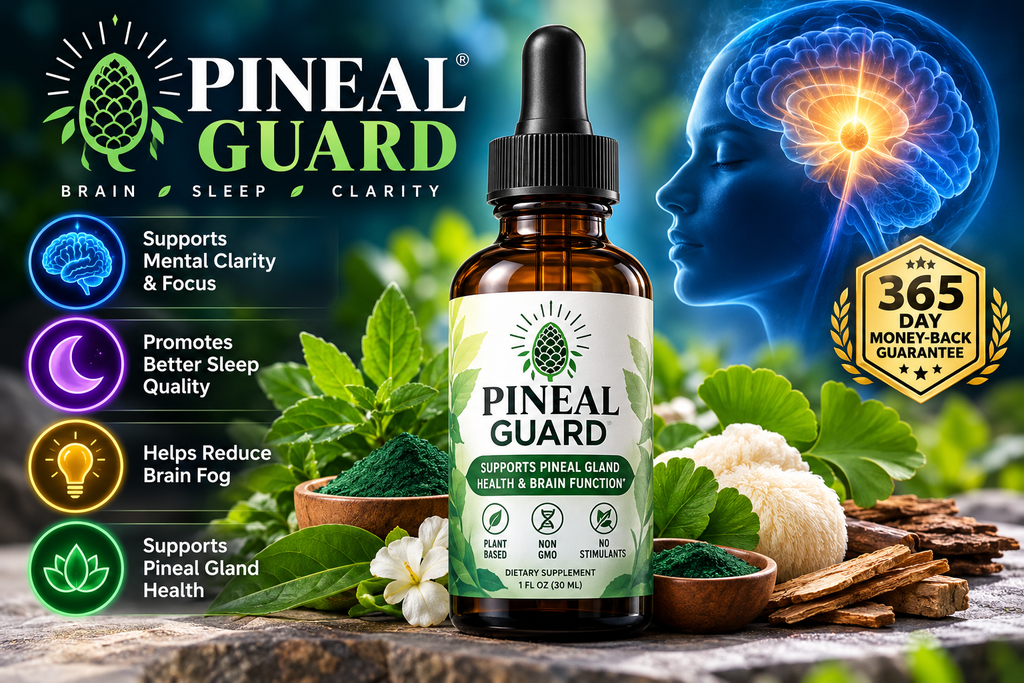
Quick Verdict — Read This First
Pineal Guard is worth trying IF you’re struggling with persistent brain fog, poor sleep quality, or low mental energy and you want a plant-based, liquid supplement with a very long safety net to test it.
It is NOT the right fit if you want a clinically-proven drug, expect overnight results, or are looking for something with a large body of double-blind human trials specifically backing the finished formula.
The ingredients themselves — Lion’s Mane, Bacopa Monnieri, Ginkgo Biloba, Chlorella, Spirulina and others — are individually well-studied. That’s real. The “pineal gland decalcification” marketing angle is more speculative than the science currently supports. But here’s what matters practically: the product comes with a 365-day, no-questions-asked money-back guarantee. That’s one of the longest refund windows in the supplement industry, which removes almost all the financial risk from trying it.
👉 Try Pineal Guard Risk-Free for 365 Days — Official Website
Pineal Guard — Quick Reference Summary
| Product Name | Pineal Guard |
| Format | Liquid drops (sublingual) |
| Key Ingredients | Lion’s Mane, Ginkgo Biloba, Bacopa Monnieri, Chlorella, Spirulina, Pine Bark Extract, Tamarind, Moringa, Neem |
| Price | $69 (1 bottle) / $59 (3 bottles) / $49 (6 bottles) |
| Refund Policy | 365-day, no-questions-asked money-back guarantee |
| Manufacturer | Pineal Guard (sold via ClickBank) |
| Dosage | 1 drop per day, preferably morning |
| Available | Online only — official website |
| Support Email | support@pinealguard.com |
| Recommended For | Adults with brain fog, poor sleep, low focus |
| Rating | 7.2/10 |
What Is Pineal Guard?
Pineal Guard is a liquid dietary supplement designed to support the function of the pineal gland — a small, pea-sized gland deep in the brain that produces melatonin and regulates your sleep-wake cycle.
It comes as a dropper bottle. You take one drop a day, ideally in the morning, either directly or mixed into a drink. The formula is plant-based, non-GMO, and contains no stimulants or added chemicals.
The product is sold through ClickBank (one of the world’s largest affiliate marketplaces), which means you’ll see a lot of reviews from affiliates online. This review aims to cut through that noise.
The core idea Pineal Guard is built on:
- Modern life exposes us to fluoride (from tap water, toothpaste, processed food)
- Fluoride and other environmental toxins accumulate in the pineal gland over time
- This accumulation (calcification) can reduce melatonin production
- Pineal Guard’s ingredients help detoxify the gland and restore its natural function
That’s the narrative. Below we’ll look at how much of it holds up to scrutiny.
Who Is Pineal Guard Actually For?
This supplement is designed for adults who:
- Experience ongoing brain fog that doesn’t resolve with sleep or diet changes
- Have trouble falling or staying asleep consistently
- Feel mentally sluggish, especially in the morning
- Are interested in natural, plant-based nootropic support
- Want a long refund window while they test a new product
Pineal Guard is NOT for you if:
- You are pregnant, nursing, or on prescription medication (consult your doctor first)
- You have a diagnosed sleep disorder and need clinical treatment
- You expect pharmaceutical-speed results — this is a slow-build supplement
- You prefer capsules to liquid drops
- You’re under 18
How Pineal Guard Actually Works
You purchase online (official site only), and the bottle ships directly to you. One bottle is a 30-day supply at one drop per day.
The formula is a liquid, which means ingredients can absorb sublingually (under the tongue) rather than having to survive full digestive breakdown like a capsule. This is a real advantage for bioavailability — liquid supplements generally get into the bloodstream faster than tablets.
The formula works through three overlapping stages:
- Detoxification phase: Chlorella, Spirulina, Tamarind, and Neem are included to help the body bind to and eliminate heavy metals and environmental toxins, theoretically reducing the fluoride load on the pineal gland.
- Cellular protection: Pine Bark Extract and Moringa bring antioxidant activity to protect pineal and brain tissue from oxidative stress.
- Cognitive and neural support: Lion’s Mane, Bacopa Monnieri, and Ginkgo Biloba provide the most evidence-backed layer — these are well-studied for supporting memory, focus, and blood flow to the brain.
In practice, most users report that any effects build gradually over 3–8 weeks. Don’t expect a dramatic day-one difference.
Pineal Guard Ingredients — Full Breakdown
The formula contains nine key plant-based ingredients. Here’s what each one actually does:
1. Lion’s Mane Mushroom
One of the most researched nootropic mushrooms. Studies show it stimulates production of Nerve Growth Factor (NGF), which supports the growth and maintenance of brain neurons. This is the strongest cognitive-function ingredient in the formula.
2. Bacopa Monnieri
An Ayurvedic herb with clinical backing for memory retention and cognitive processing speed. It works by protecting neurons from damage and reducing cortisol (the stress hormone that impairs cognition). Results typically appear after consistent use of 4–6 weeks.
3. Ginkgo Biloba
One of the most widely studied brain supplements. Improves microcirculation to the brain, which means more oxygen and glucose delivery to neurons. Commonly used in Europe as a licensed treatment for mild cognitive impairment.
4. Pine Bark Extract
Rich in proanthocyanidins — powerful antioxidants that cross the blood-brain barrier. Research from the National Institutes of Health has found it has a neuroprotective effect on brain cells.
5. Chlorella
A fresh-water algae well-known as a natural chelating agent — meaning it binds to heavy metals like mercury and lead in the body and helps flush them out. This is the main “detox” ingredient in the formula.
6. Spirulina
A blue-green algae and legitimate superfood. Rich in antioxidants and has demonstrated anti-inflammatory effects on brain tissue in clinical studies. Also provides B vitamins that support neurological function.
7. Moringa
Contains over 90 bioactive compounds including quercetin and chlorogenic acid. These have antioxidant and anti-inflammatory properties relevant to brain health and cellular protection.
8. Tamarind
Contains xyloglucan — a compound from tamarind seeds researched at Monash University for its role in supporting nerve cell regeneration. It’s an unusual inclusion that gives Pineal Guard a degree of formula uniqueness.
9. Neem
Used in traditional Ayurvedic medicine for its antimicrobial and purifying properties. In this formula, it contributes to the broader detoxification mechanism alongside Chlorella and Spirulina.
Importantly, the manufacturer states ingredients are tested for purity and formulated in a GMP-certified facility. The formula is non-GMO, stimulant-free, and contains no artificial additives.
What People Genuinely Like About Pineal Guard
- Liquid format with good bioavailability — Unlike capsules that take time to dissolve and digest, the liquid dropper absorbs quickly. Users frequently note it’s easy to take with any morning drink.
- Genuinely evidence-backed ingredients — Lion’s Mane, Bacopa, and Ginkgo Biloba aren’t speculative additions. They have real research behind them for cognitive support.
- Clean formula — no stimulants — No caffeine, no synthetic additives. This makes it stackable with coffee or other supplements without jitteriness.
- 365-day money-back guarantee — This is exceptional. Most supplements offer 30–60 days. A full year to test the product removes virtually all financial risk.
- Improved sleep reported by many users — Multiple forum users note faster sleep onset and fewer nighttime wake-ups after 2–4 weeks of consistent use.
- Reduced brain fog over time — The most consistent benefit reported: users feel clearer and more “present” in the morning, especially after the 3–4 week mark.
- Subtle rather than jittery mental lift — Unlike stimulant-based nootropics, users describe the improvement as calm focus rather than a wired feeling.
What People Don’t Like — Honest Weaknesses
This is the section that most affiliate reviews skip. Don’t skip it.
- The “pineal gland decalcification” claim is marketing, not proven science — The idea that this formula specifically targets and decalcifies your pineal gland is not backed by direct human clinical trials. The fluoride-pineal link exists in animal studies and correlation data, but hasn’t been definitively proven in humans. If this is your only reason for buying, dial back your expectations.
- Results are slow and inconsistent — Some users feel a difference in 2 weeks. Others report nothing after a full month. Body chemistry varies, and this isn’t a rapid-onset product.
- Only sold online — No physical retail. If you want it urgently or distrust online purchases, this is a limitation.
- Customer service response times have drawn complaints — Some users on forums reported that support emails took over a week to get a reply. The support email is support@pinealguard.com — keep this saved if you need a refund.
- No published proprietary blend amounts — The label lists the ingredients but not precise milligram doses for each one. This makes it hard to compare to clinical dosages used in studies.
The Fluoride-Pineal Science: What Research Actually Says (Unique Section)
This is the section most reviews don’t write honestly, so here it is.
What’s confirmed:
- The pineal gland accumulates more fluoride than any other soft tissue in the human body — this is documented in peer-reviewed research, including work by Dr. Jennifer Luke at the University of Surrey.
- Pineal calcification (calcium phosphate deposits) is a real and common phenomenon. Studies show it increases with age.
- Greater calcification correlates with reduced melatonin production in some research.
- A 2019 animal study in Biological Trace Element Research showed that a fluoride-free diet stimulated pineal gland regeneration in aged rats.
- In September 2024, a federal judge in California ordered the EPA to further regulate fluoride levels in drinking water — a development that has reignited public interest in the fluoride-brain tissue link.
What’s NOT confirmed (and Pineal Guard’s marketing glosses over this):
- There is no direct human clinical trial showing that any oral supplement specifically “decalcifies” the pineal gland.
- The human studies available have failed to show a clear, causal connection between fluoride exposure, pineal calcification, and neurotoxicity in people (according to the National Institutes of Health and independent fact-checkers).
- Most research remains at the animal or correlation level.
The practical takeaway: The ingredients in Pineal Guard that support general brain health (Lion’s Mane, Bacopa, Ginkgo) have solid backing. The “decalcify your pineal gland” claim specifically is a marketing narrative with partial scientific support, not a proven mechanism. This matters if you’re buying specifically for that claim. It matters less if you’re buying for general cognitive and sleep support, where the formula is more honestly supported.
Pineal Guard vs Competitors: The Comparison Nobody Builds Right
Most comparison tables just list prices. This one compares what actually matters to the buyer.
| Feature | Pineal Guard | Generic Nootropic Capsule | Melatonin Supplement |
|---|---|---|---|
| Format | Liquid drops (fast-absorbing) | Capsules (slower digestion) | Tablet or gummy |
| Targets pineal gland specifically? | Yes (marketing claim, partially supported) | No | No (provides melatonin directly) |
| Has detox ingredients? | Yes (Chlorella, Spirulina, Neem) | Rarely | No |
| Refund window | 365 days ✅ | 30–60 days | 30–60 days |
| Stimulant-free | Yes ✅ | Often no | Yes |
| Cognitive support ingredients | Lion’s Mane, Bacopa, Ginkgo | Varies widely | None |
| Sleep support | Indirect (via pineal/melatonin support) | Rarely | Direct (adds melatonin) |
| Price per month | $49–$69 | $20–$50 | $5–$20 |
| Non-GMO, no additives | Yes ✅ | Varies | Often has additives |
Key insight: If you only want better sleep and don’t care about cognitive support, a basic melatonin supplement is cheaper and more direct. If you want a full brain-health formula with a long safety net, Pineal Guard sits in a different category entirely.
Speaking of other natural supplement reviews you might find relevant — if you’ve been exploring brain and cognitive health products, you may also want to check out this Memovolt review (2026) — it covers a different approach to cognitive support that some readers compare to Pineal Guard. Or if sleep is your primary concern, the Quantum Wave brain audio review explores a non-supplement option for mental clarity and sleep.
Pineal Guard Price — How Much Does It Cost?
Pineal Guard is only available through the official website. Here are the current prices:
- 1 bottle (1-month supply): $69
- 3 bottles (3-month supply): $59/bottle = $177 total
- 6 bottles (6-month supply): $49/bottle = $294 total — includes free shipping
The manufacturer states that 97% of customers order the 6-bottle option. That’s likely because results typically take 4–8 weeks to become noticeable — making a 1-bottle trial genuinely short for evaluation purposes. The 3-bottle option is a reasonable middle ground.
Free shipping kicks in on orders of 3 bottles or more.
The refund policy covers all package sizes — so even if you buy 6 bottles and it doesn’t work for you, you can return the unused portion within 365 days for a full refund.
👉 Check Current Pineal Guard Pricing — Get the Lowest Bottle Price Here
What’s Really Driving the Interest in Pineal Guard in 2026?
This is a unique angle you won’t find in other reviews.
The spike in interest around pineal gland health isn’t random. Three things have pushed it into mainstream conversation:
- The 2024 EPA fluoride ruling — A federal judge ordered the EPA to further regulate fluoride in drinking water. The story went massively viral and pushed millions of people to search whether fluoride actually harms the brain. Pineal Guard benefits directly from that search traffic.
- Aging population + brain fog epidemic — Brain fog is now one of the most Googled health symptoms in the US. Post-COVID, millions more people are dealing with cognitive fatigue and looking for natural solutions that aren’t prescription drugs.
- Spiritual wellness crossover — The pineal gland has long been associated with the concept of the “third eye” in certain spiritual traditions. This gives Pineal Guard an audience beyond typical brain supplement buyers — people interested in consciousness, intuition, and spiritual clarity who want a physical product to support that.
Understanding this context helps you evaluate whether the product fits your actual reason for looking. If you’re coming from the fluoride-concern angle, the cognitive support is real but the “decalcification” claim is speculative. If you’re coming from the brain fog angle, the formula is more honestly positioned for you.
Pineal Guard FAQ — Pre-Purchase Questions Answered
Is there a money-back guarantee? How does it work?
Yes. Pineal Guard offers a 365-day, no-questions-asked money-back guarantee. This is unusually long — most ClickBank supplements offer 60 days. You can return unused portions for a full refund within one year of purchase. Contact support at support@pinealguard.com to initiate a return.
Does the refund policy work if I bought through an affiliate link?
Yes. ClickBank handles all transactions and their refund process applies regardless of which link you used to purchase. You can also contact ClickBank directly at clkbank.com if you have order issues.
How do I take Pineal Guard?
One drop per day, preferably in the morning. You can take it directly under the tongue or add it to tea, coffee, juice, or water. Shake the bottle well before each use to ensure ingredients are mixed.
How long until I see results?
Most users report noticeable changes between weeks 2–6 of consistent daily use. Cognitive supplements generally don’t work overnight. If you want to evaluate the product fairly, give it at least 30–60 days.
Are there any side effects?
The formula is plant-based and stimulant-free. No severe side effects have been widely reported. Some users may experience mild digestive adjustment in the first week. If you are pregnant, nursing, or on medication, consult your doctor before use.
Is Pineal Guard available internationally?
Yes, but international shipping fees apply. The base free-shipping offer is for US orders of 3+ bottles. Check the shipping policy at pinealguard.com for your country’s rates.
Is it available in stores or on Amazon?
No. Pineal Guard is sold exclusively through the official website. If you see it on Amazon or other marketplaces, it may be unauthorized and won’t come with the 365-day guarantee.
Are there upsells after checkout?
Yes. Like most ClickBank products, there is an upsell sequence after purchase. The core Pineal Guard product is complete on its own. The add-ons are optional and not required for the supplement to work as marketed.
Can I take Pineal Guard with other supplements?
Generally yes, as it contains no stimulants or known interactions with common supplements. However, if you’re on prescription medication — especially blood thinners or seizure medications — consult your doctor, as Ginkgo Biloba can interact with some drugs.
👉 Try Pineal Guard with a Full 365-Day Money Back Guarantee — Order Here
Final Verdict — Is Pineal Guard Worth Buying in 2026?
Pineal Guard earns a 7.2/10 from this review.
Here’s the honest breakdown:
The ingredient list is legitimate. Lion’s Mane, Bacopa Monnieri, Ginkgo Biloba, and Pine Bark Extract are backed by real research for cognitive support, memory, and neuroprotection. This is not a snake oil formula.
The “decalcify your pineal gland” narrative is partly speculative. There’s real science about fluoride and pineal calcification, but no human clinical trials proving a liquid supplement reverses it. Be honest with yourself about which claim you’re buying for.
The 365-day refund window is genuine and exceptional. It’s rare in this industry. This alone changes the risk calculation significantly. You have a full year to test it — not 60 days.
Results take time and vary by person. If you try it for two weeks and notice nothing, that’s not necessarily a failure. Most cognitive supplements need consistent daily use for a month or more before meaningful changes accumulate.
Bottom line: If you’re dealing with brain fog, disrupted sleep, or just want a clean, plant-based cognitive support supplement with almost no financial risk — Pineal Guard is worth the trial. The 365-day guarantee effectively turns this into a “try it and see” proposition with almost no downside.
If you’re buying purely on the pineal decalcification marketing claim, temper your expectations with the reality of where the science currently sits.
👉 Visit Official Pineal Guard Website — 365-Day No-Risk Trial
Related Reading
- Memovolt Review 2026 — A comparison brain support pill worth reading if you’re comparing cognitive supplement options.
- The Brain Song Review 2026 — An audio-based approach to brain health, for readers who prefer non-supplement options.
- NeuoQuiet Review 2026 — If cognitive issues overlap with tinnitus or auditory stress, this review is relevant.
Disclaimer: This article is for informational purposes only and does not constitute medical advice. The statements in this review have not been evaluated by the Food and Drug Administration. Pineal Guard is not intended to diagnose, treat, cure, or prevent any disease. Individual results will vary. Always consult a qualified healthcare professional before starting any new supplement, especially if you have a pre-existing medical condition or take prescription medication.