Affiliate Disclosure: This article contains affiliate links. If you purchase through our link, we may earn a commission at no extra cost to you. We only recommend products we’ve honestly evaluated.
Updated: September 2026
Quick Verdict — Read This First
Smart Water Box is worth buying IF you live in a humid climate, enjoy hands-on DIY projects, and want a low-cost backup water source for emergencies, off-grid living, or homesteading.
It is not the right fit if you live in a dry desert climate, expect a ready-to-use appliance to arrive in the mail, or need an immediate water solution right now.
Here’s the single most important thing to understand before you read another word: Smart Water Box is a digital DIY blueprint, not a physical product. You buy a downloadable guide for $39, then spend $100–$300 sourcing parts yourself to build an atmospheric water generator (AWG) — a device that pulls moisture from the air and turns it into drinkable water.
That’s not a scam. The technology is real. The science works. But the gap between what the sales page implies and what you’re actually getting trips up a lot of buyers — and that’s where most complaints come from.
With that cleared up, let’s get into everything else.
👉 Try Smart Water Box Risk-Free for 60 Days →
At-a-Glance Summary
| Field | Detail |
|---|---|
| Product Name | Smart Water Box |
| Creator / Vendor | Published under pen name “James Anderson” via WaterSmartBox.com |
| Price | $39 (digital guide only) |
| Additional Build Cost | ~$100–$300 in parts (sourced separately) |
| Format | Digital download — PDF guide, diagrams, video instructions, bonuses |
| Refund Policy | 60-day money-back guarantee via ClickBank |
| Technology | Atmospheric water generation (condensation-based) |
| Best For | Preppers, homesteaders, off-grid living, humid climates |
| NOT Best For | Arid/desert climates, people who want a turnkey device |
| Our Rating | 7.5 / 10 |
What Is Smart Water Box?
Smart Water Box is a $39 digital guide that teaches you how to build a DIY atmospheric water generator (AWG) — a device that pulls moisture from the air and converts it into clean, drinkable water using condensation technology.
Nothing physical ships to your door. You download the guide instantly after purchase, then build the device yourself using parts from a hardware store or online supplier.
The technology behind it isn’t new or mysterious. Atmospheric water generators have been used in military field operations, disaster relief deployments, and remote off-grid homesteads for years. Commercial AWG units do exactly the same thing — they just cost $1,500 to $3,000 and do the hard work for you. Smart Water Box essentially hands you the blueprint to DIY a version of that at a fraction of the price.
The guide is sold through ClickBank under the author pen name “James Anderson” (the sales page openly acknowledges it’s a pen name). The website is watersmartbox.com.
Who It’s Actually For — and Who Should Skip It
✅ Buy This If You Are:
- A prepper or survivalist building a water independence strategy for emergencies, grid failures, or supply disruptions
- An off-grid homesteader who wants a supplemental water source that doesn’t rely on wells, rain, or municipal systems
- Someone in a humid climate (coastal areas, the American South, Southeast Asia, tropical regions) where the technology performs best
- A hands-on DIYer who is comfortable following step-by-step assembly instructions
- Someone with $200–$400 in total budget (guide + parts) and the time to build over a weekend or two
- Anyone who wants to test the AWG concept cheaply before investing in a commercial unit
❌ Skip This If You Are:
- Located in a dry or semi-arid climate — desert areas, high-altitude inland regions, or anywhere with relative humidity below 40%. The technology struggles and output drops dramatically
- Expecting a ready-to-use device that arrives in a box — this is not that product
- Looking for a primary daily water replacement for a full household. This is a supplemental source, not a faucet
- Someone who needs water immediately — sourcing parts, building, and testing takes days to weeks
- Anyone expecting third-party certified output data — none exists for this specific guide
How It Actually Works
The Smart Water Box is built around a well-established scientific process called condensation-based atmospheric water generation. Here’s the simple version of how it works:
- A small fan draws humid air into the unit
- That air passes over a refrigerated coil (cooled below the air’s dew point)
- When warm humid air hits the cold surface, water vapor condenses into liquid droplets — the same way a cold glass sweats on a hot day
- Those droplets drip into a collection reservoir
- The collected water is then run through a multi-stage filtration system to remove impurities before drinking
It’s the same fundamental engineering used in commercial AWG units costing thousands of dollars — the kind deployed in military field operations and disaster zones where no other water source exists. The Smart Water Box guide gives you a beginner-friendly way to build your own version from affordable, off-the-shelf components.
Important: Output depends entirely on your local humidity level and ambient temperature. High humidity = more water. Low humidity = significantly less. This is physics, not a product flaw.
What You Get When You Buy
For $39, you receive a digital download package containing:
- The Main Build Guide — step-by-step instructions with diagrams written for people with no engineering background
- Simplified Visual Schematics — showing exactly how each component connects
- Parts & Materials Checklist — a full list of everything you need, most of it available at any hardware store
- Water Safety & Filtration Section — how to properly collect, filter, and store your condensed water
- Troubleshooting Guide — common build issues and how to fix them
- Video Walkthroughs — video links embedded in the guide for visual learners
3 Free Bonuses Included:
- Bonus #1: SunHeat DIY Solar Water Heating Blueprint — how to build a solar hot water system without gas or electricity
- Bonus #2: Home DIY Secrets — energy-saving hacks and utility bill reduction tips
- Bonus #3: Lifetime Support Access — direct troubleshooting help from the team if you run into build issues
The guide lands in your inbox within minutes of purchase. No shipping. No wait.
☝ Get Smart Water Box + All 3 Bonuses — 60-Day Money-Back Guarantee
What People Genuinely Like
1. The technology is real and proven
AWG isn’t fringe science. It’s used by the U.S. military in remote deployments, deployed in disaster-relief operations, and sold commercially by multiple manufacturers. The Smart Water Box builds on documented, publicly researched technology — not pseudoscience.
2. Extremely low barrier to entry
At $39, the guide itself is one of the cheapest ways to evaluate whether atmospheric water generation makes sense for your situation before spending $1,500–$3,000 on a commercial unit.
3. Beginner-friendly instructions
Multiple independent buyers — including a 65-year-old retired librarian and a retired mechanic — report successfully completing the build following the video and PDF instructions. The guide was specifically written for people without electrical or plumbing experience.
4. No ongoing infrastructure costs
Once built, the unit pulls water from ambient air. No pipes, no well permits, no recurring utility charges beyond the small amount of electricity the fan and compressor use.
5. Infrastructure-independent water source
Unlike rain barrels (need rain), wells (need groundwater access and permits), or municipal water (requires the grid to stay up), an AWG works as long as there’s humidity in the air — which there almost always is.
6. Supplemental strategy, not a total replacement
The guide is honest about this being a supplemental or emergency source — it doesn’t claim to replace your plumbing. That honesty matches what the technology can actually deliver, which is a good sign.
7. 60-day no-questions-asked refund window
Sold through ClickBank, which means a guaranteed 60-day refund process. If you decide it’s not for you, refunding is straightforward through ClickBank’s customer portal. The risk is genuinely minimal.
8. Three solid bonus guides included
The solar water heating blueprint and home DIY secrets bonuses add practical value that makes the $39 price feel reasonable even if you never build the main unit.
Real Weaknesses You Should Know (Honest Section)
Every review worth reading names the problems. Here are the real ones:
1. The sales page oversells the output numbers
The biggest complaint across every forum and review site. The marketing copy suggests up to 40 gallons per day. Independent reviewers and buyers consistently report far lower output in real-world conditions — typically 1–5 gallons per day in moderately humid environments for a DIY build. A machine producing 40 gallons daily would be commercial-grade industrial hardware, not a $100 garage project. The technology works, but the numbers need to be taken with serious skepticism.
2. It’s not a physical product — and the sales page doesn’t shout that loudly
The name “Smart Water Box” implies something arrives at your door. It doesn’t. You get a PDF guide. Many buyers feel misled when they receive a download link instead of a device. This is the root cause of the majority of one-star reviews online.
3. Total cost is higher than $39
The guide costs $39 but you’ll spend an additional $100–$300 on parts. Budget $150–$350 total minimum. If you live somewhere where parts are expensive or hard to source, costs can go higher.
4. Performance collapses in dry climates
This is physics, not a bug. If your local relative humidity stays below 40%, don’t buy this. The condensation process requires moisture in the air to have anything to condense. No humidity = no water. Desert residents will be disappointed.
🌡️ Unique: Real-World Output by Climate Type (No Other Review Shows This)
Most Smart Water Box reviews tell you “output depends on humidity.” None of them actually show you what that means in practical terms. Here’s a realistic breakdown based on how atmospheric water generators perform by climate type:
| Climate Type | Typical Relative Humidity | Realistic Daily Output (DIY AWG) | Verdict for Smart Water Box |
|---|---|---|---|
| Tropical / Coastal (e.g., Florida, Lagos, Philippines) | 70–90% | 3–8 gallons/day | ✅ Best case. Highly recommended. |
| Humid Subtropical (e.g., Texas Gulf, Southeast US) | 60–75% | 2–5 gallons/day | ✅ Good performance for supplemental use |
| Temperate / Moderate (e.g., Pacific Northwest, UK) | 50–65% | 1–3 gallons/day | ⚠️ Usable but limited — treat as emergency backup only |
| Semi-Arid (e.g., inland California, parts of Australia) | 25–45% | 0.5–1 gallon/day | ❌ Very poor performance. Not worth building for this alone. |
| Arid / Desert (e.g., Arizona, Nevada, Sahara regions) | Below 25% | Near zero | ❌ Do not buy for this climate. |
How to check your local humidity: Search “[your city] average relative humidity by month” on Google. If your average drops below 50% for most of the year, this product is not a good fit for your location.
Why this matters: A family of four drinks roughly 2 gallons per day minimum. In a tropical/coastal climate, a well-built DIY AWG could realistically cover drinking water needs. In a semi-arid climate, it barely covers one person — and in a dry desert, you’d be lucky to fill a coffee mug overnight.
Smart Water Box vs. Alternatives
| Feature | Smart Water Box | Commercial AWG Unit (e.g., WaterGen) | Rain Barrel System | Well + Pump System |
|---|---|---|---|---|
| Upfront Cost | $39 guide + ~$100–$300 parts | $1,500–$3,000+ | $100–$300 | $3,000–$15,000+ |
| Requires Rain? | No | No | Yes | No |
| Requires Groundwater? | No | No | No | Yes |
| Works in Dry Climates? | No | Partially | Depends on rain | Yes |
| DIY Build Required? | Yes | No (plug and play) | Minimal | Professional install |
| Regulatory Permits Often Needed? | Rarely | No | Some states restrict rain collection | Yes (most areas) |
| Refund Option? | 60-day ClickBank guarantee | Varies by vendor | Standard retail return | N/A |
| Best Use Case | Budget AWG tester / humid climate homesteader | Serious off-grid or water-scarce deployment | Garden irrigation, non-drinking use | Full primary water supply |
Bottom line: If your budget is under $400, you live in a humid area, and you’re comfortable building things, Smart Water Box is genuinely one of the best low-cost entry points into water independence. If you want plug-and-play reliability and budget isn’t the main concern, a commercial AWG is worth every extra dollar.
Common Complaints — Addressed Directly
“I expected a physical box and got a PDF.”
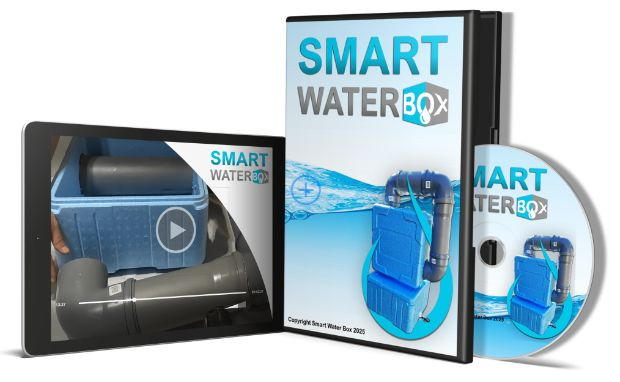
This is the most common complaint online, and it’s valid as a criticism of the marketing — but it doesn’t make the product a scam. The guide delivers exactly what it is: DIY blueprints. The issue is that the sales page leans heavily into visual imagery that implies a physical device.
“I didn’t get anywhere near 40 gallons a day.”
Almost nobody does. The 40-gallon claim reflects an optimistic best-case scenario under ideal conditions. Realistic output for a DIY build in a moderately humid environment is 2–5 gallons per day. If this expectation is managed correctly upfront, most buyers find the performance acceptable for supplemental use.
“The checkout page has fake countdown timers.”
True — the sales page uses urgency tactics that reset. This is a common (and annoying) affiliate marketing practice and doesn’t reflect the quality of the guide itself.
“My parts cost more than the guide said.”
The guide suggests parts can be sourced for under $106. That’s possible with careful shopping and some existing tools, but many buyers report $150–$300 in total parts cost. Budget higher to avoid disappointment.
“Is this based on real technology or is it pseudoscience?”
Real technology. Atmospheric water generation is extensively documented, used by commercial manufacturers, the military, and NGOs in water-scarce regions. The science is not in question. The question is whether a DIY version built from a $39 guide performs as advertised — and the honest answer is: somewhat, if you’re in the right climate.
🔢 The True Total Cost Nobody Tells You Upfront
This is original analysis you won’t find in most Smart Water Box reviews.
Most reviews focus only on the $39 guide price. But to actually use Smart Water Box, here’s what a complete budget looks like:
| Item | Estimated Cost |
|---|---|
| Smart Water Box Guide | $39 |
| Condensing unit / refrigeration coil | $40–$80 |
| Fan(s) for airflow | $15–$30 |
| Food-safe collection reservoir / barrel | $20–$50 |
| Multi-stage water filter set | $25–$60 |
| Tubing, fittings, connectors | $15–$40 |
| Enclosure / box frame (if not building from scratch) | $20–$50 |
| Miscellaneous hardware (screws, sealant, wire) | $10–$30 |
| TOTAL ESTIMATED RANGE | $184 – $379 |
The lower end assumes you already own basic tools and get lucky on parts. The higher end reflects typical real-world sourcing for most buyers.
Additionally: the finished unit draws a small amount of electricity continuously. At average U.S. electricity rates, expect $5–$15/month in added electric costs depending on how long you run it.
Compared to a commercial AWG at $1,500–$3,000, the total DIY cost of ~$200–$380 is still a significant saving — but it’s important to go in with realistic numbers, not just the $39 guide price.
☝ See Current Price & Discount on Official Site →
⚡ DIY AWG vs. Commercial AWG: Energy Efficiency Reality
One thing no other Smart Water Box review covers: energy efficiency comparison.
Commercial AWG units are engineered to extract the maximum water per kilowatt-hour of electricity used. A well-designed commercial unit might produce 1 liter of water per 0.3–0.5 kWh of energy in optimal conditions.
A DIY build from a guide like Smart Water Box will be less energy-efficient by design — because the components aren’t precision-matched and the system isn’t professionally optimized. Expect roughly 1 liter per 0.5–1.5 kWh.
For emergency/supplemental use this doesn’t matter much. If you’re trying to run it 24/7 as a primary source, energy costs add up and a commercial unit becomes more cost-effective over 2–3 years.
For preparedness and homesteading — where you’d primarily run it during grid failures or dry spells — the efficiency gap is largely irrelevant.
Refund Policy — How It Works
Smart Water Box is sold through ClickBank, which enforces a 60-day no-questions-asked money-back guarantee on all purchases.
To request a refund:
- Visit clkbank.com (ClickBank’s customer portal)
- Enter your order details
- Submit a refund request — no need to email the vendor or explain yourself
ClickBank processes these quickly, typically within 3–5 business days back to your original payment method.
Important note for affiliate-link buyers: Yes, you can still get a refund if you purchased through an affiliate link (like ours). The guarantee is with ClickBank, not the affiliate. Your refund rights are identical regardless of how you found the product.
For product support, contact the vendor directly at: watersmartbox.com/contact
For order support, contact ClickBank at: clkbank.com
Frequently Asked Questions
Is Smart Water Box a scam?
No. It’s a legitimate DIY guide based on real atmospheric water generation technology. The main complaint isn’t that it doesn’t work — it’s that the marketing creates expectations the guide can’t fully meet (especially around the 40-gallon output claim). If you go in knowing exactly what it is (a DIY blueprint, not a finished appliance), it’s a fair product for the right buyer.
Is there really a 60-day money-back guarantee?
Yes. ClickBank’s 60-day refund policy applies to all purchases. It covers purchases made through affiliate links as well as direct purchases.
How do I access the guide after buying?
You receive an email with a download link immediately after purchase. Access is instant — no shipping, no waiting. ClickBank sends a separate order confirmation email as well.
Does Smart Water Box work internationally?
The guide itself is digital and works anywhere. Whether the system performs well depends entirely on your local humidity levels, not your country. See the climate table above to check expected output for your region.
How long does it take to build?
Most buyers report the build takes 1–3 weekends once they have all the parts in hand. Sourcing the parts can take additional days if ordering online.
Do I need electrical or plumbing experience?
No. The guide is specifically designed for beginners. That said, basic comfort with simple tools (screwdrivers, drill, measuring tape) helps considerably.
Are there upsells after checkout?
There may be additional offers presented during checkout. The core guide is complete on its own — you don’t need any add-ons to build the system.
How much water will I actually get per day?
Realistically, 1–5 gallons per day in moderately to highly humid conditions. The advertised “up to 40 gallons” reflects extreme best-case assumptions that most DIY builders won’t reach. See the climate table earlier in this article for realistic estimates by region.
Can I use the water produced for drinking?
Yes — but only after running it through the filtration steps described in the guide. Raw condensate should always be filtered before drinking. The guide covers this specifically.
What if I can’t find the parts locally?
Most parts are available on Amazon or at major hardware retailers (Home Depot, Lowe’s, etc.). The guide includes sourcing recommendations. The troubleshooting section also addresses substitutions.
Further Reading
If you’re researching home energy and water independence systems, you might also find this useful:
- Energy Revolution System Review — Real Savings or Scam? — An honest look at another DIY energy independence guide and whether it delivers real results.
- ProDentim Review 2026 — Does It Actually Work? — A deep, honest breakdown of the popular oral health supplement.
Final Verdict — Is Smart Water Box Worth It?
Short answer: Yes, for the right person in the right climate.
Here’s the honest summary:
- The technology is real and proven. AWG works. The guide teaches you to build one.
- The guide price ($39) is fair for what you receive. The three bonuses add genuine value.
- The 60-day refund window removes most of the financial risk from trying it.
- The sales page oversells output numbers — the 40 gallons/day claim is not realistic for a DIY build in most conditions. Expect 2–5 gallons/day in good humidity conditions.
- Your total cost is $150–$380, not just $39 — budget for parts.
- Humidity is everything. If you’re in a dry climate, don’t buy this.
If you live somewhere humid and you want a low-cost way to test whether an atmospheric water generator could fit into your emergency preparedness or off-grid water strategy — Smart Water Box is one of the cheapest and lowest-risk ways to find out.
If you want a plug-and-play water appliance, you’ll need to spend more on a commercial AWG unit. But for a $39 experiment that could save you $1,500 in commercial unit costs if the build works for your situation — that’s a reasonable bet with a 60-day safety net.
☝ Try Smart Water Box Risk-Free — 60-Day Money-Back Guarantee →
Disclaimer: This article is for informational purposes only and contains affiliate links. We may earn a commission if you purchase through our link, at no extra cost to you. Smart Water Box is a DIY digital guide — results vary based on local humidity, build quality, and individual effort. Water produced by any home-built system should be properly filtered before drinking. Output figures in this article are based on available buyer reports and AWG technology benchmarks; individual results will differ. Always verify current pricing and refund terms on the official website before purchasing. This article does not constitute professional advice of any kind.